
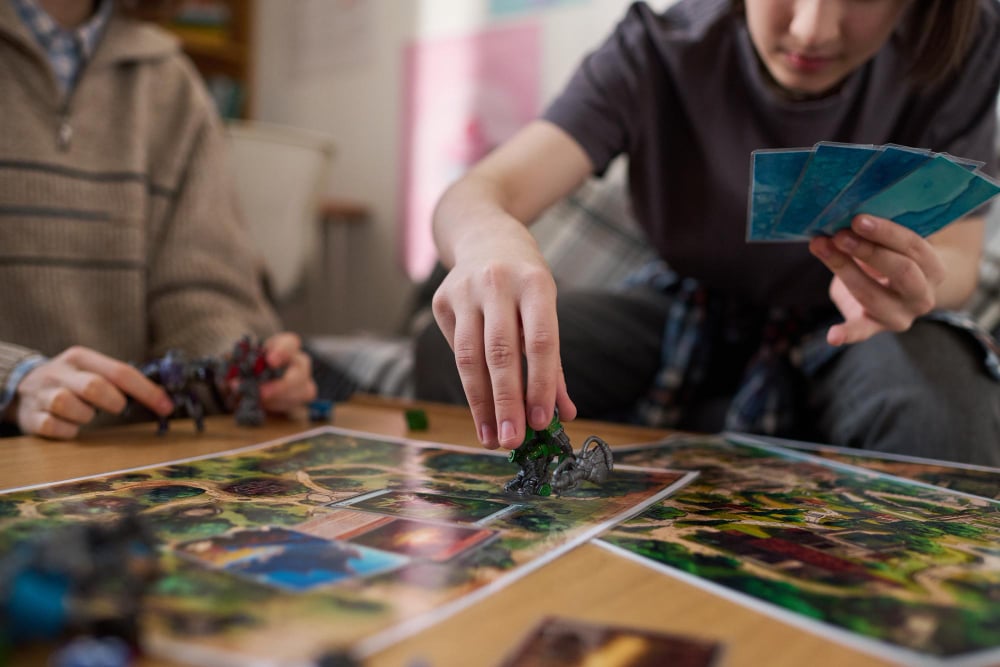
How Dungeons & Dragons (and other TTRPG) Can Help Us Grow: An OT’s Perspective
Tabletop role-playing games like Dungeons & Dragons offer far more than entertainment—they’re powerful tools for skill development that can benefit neurodivergent kids and adults alike.
From building social communication and problem-solving abilities to practicing self-advocacy and emotional regulation, TTRPGs create safe, structured environments where players can grow essential life skills while having fun.
This article explores ten key ways that D&D and similar games support skill development, backed by research and practical insights from an occupational therapist’s perspective, plus free resources to help you get started on your own TTRPG journey.
On weekdays, I work as a pediatric occupational therapist, helping kids and teens build important everyday skills. But on the weekends, I’m off on magical adventures! Casting spells, solving mysteries, and exploring new worlds, all through Tabletop Role-Playing Games (TTRPGs) like Dungeons & Dragons.
If you’re new to the game, Dungeons & Dragons (D&D) and other TTRPGs are games where players take on characters in a fictional world, use dice rolls and creativity to solve problems, complete quests, and tell stories.
The game is all about teamwork, imagination, and strategy!
How D&D and TTRPGs Support Skill Development
When I’m playing a D&D game, I can’t help but notice how these types of games support so many of the same skills I work on in my occupational therapy sessions! Skills such as problem-solving, teamwork, communication, and self-regulation.
1. Structured Social Practice
TTRPGs offer a supportive and predictable way for anyone to practice social skills in a low-pressure setting. Playing a character allows people to experiment with communication, collaboration, and decision-making without the same stakes and pressures of real-life interactions.
This can be especially helpful for neurodivergent folks who may find certain real-world social situations more challenging.
One study found that during gameplay, autistic and neurodivergent adults reported significantly fewer social struggles compared to their everyday experiences (Moskowitz et al., 2024).
2. Emotional Growth Through Play
Kids (and grown-ups) can safely explore emotions and problem-solving by stepping into a character’s shoes.
A study by Atherton and colleagues (2025) showed that playing tabletop role-playing games, such as D&D, can lead to improved self-esteem in autistic individuals.
3. Fine Motor Skill Opportunities
Taking notes, rolling all those cool dice, moving mini-figures around the board, or helping build 3D maps are all ways for players to strengthen their fine motor skills in a fun way.
Plus, if fine motor tasks are tough, no problem! There are numerous ways to adapt the game so that everyone can participate in a way that works best for them.
Some ways to adapt TTRPGs for Fine Motor Differences
- Digital dice apps or voice-activated dice rollers instead of physical dice
- Larger, easier-to-grip dice with textured surfaces or foam dice
- Pre-made character sheets with checkboxes instead of requiring handwriting
- Simplified character tracking using apps like D&D Beyond that handle calculations automatically
- Magnetic or larger game pieces that are easier to manipulate on battle maps
- Alternative ways to participate in map-making, like verbal descriptions while others draw, or using digital mapping tools
4. Inclusive for All Kinds of Thinkers
Because D&D is so multifaceted, it creates a space where many different types of thinkers can shine in their own way- artistic, analytical, organized, imaginative, tech-savvy, etc.
In my own group, we have one person who keeps track of everything we do in a document, another player calculates numbers during battles, someone brings the story to life with expressive narration and theatrical voices, and others (like me) use our artsy skills to create imaginative maps and game pieces.
We use a mix of tools (apps like D&D Beyond, good old-fashioned paper, maps, and 3D visuals) so everyone contributes in their own way.
5. Problem Solving and Teamwork
Players practice working together, resolving conflicts, and thinking critically, without real-life pressure. When the group encounters a problem in the story, we’ll often use problem-solving strategies that can be applied to real-life situations.
For example, players may use each character’s unique strengths to solve the problem, or we’ll break down the big problem into smaller, more manageable chunks, or find someone we can ask for help.
6. Self-Advocacy Practice
TTRPGs are full of chances to speak up, make choices, and assert ourselves through the voice and actions of our characters. Unlike real-world situations where the stakes might feel high or overwhelming, D&D provides a safe practice space for developing these crucial life skills.
In the game, players regularly negotiate with their teammates, express their character’s needs and preferences, set boundaries with other characters, and advocate for their ideas during problem-solving.
This might look like a player saying, “My character doesn’t feel comfortable with this plan—can we try a different approach?” or “I think we should ask the shopkeeper for a better price.“
These in-game moments translate into real-world confidence for many players. The skills practiced through a character—asking for what you need, setting boundaries, and standing your ground—become part of your personal toolkit for everyday situations.
For neurodivergent kids especially, learning to advocate for themselves is essential for navigating school, friendships, and daily life. This article: Self-advocacy for neurodivergent kids breaks down why this skill matters so much and how to build it step by step.
And since sensory needs are such a big part of many neurodivergent kids’ daily experience, this article about teaching kids to advocate for sensory needs offers practical strategies for helping children communicate about their sensory world—skills that can be practiced and reinforced through role-playing games like D&D.
7. Strengthening Executive Functioning Skills
D&D requires a wide range of executive functioning skills, like planning, organizing, and reflecting on actions.
It also gives players the chance to explore different accommodations and strategies to support these skills – Like using visual aids like maps, leaning on teammates, breaking tasks into smaller steps, or thinking creatively to solve problems.
Learning which supports work best for you and how/when to use them is an important life skill.
8. Opportunities to Deep Dive Into Your Interests
Some neurodivergent thinkers have a tendency to focus strongly on a particular interest, learning about it to the full point of immersion. This can be called “monotropism.”
TTRPGs offer numerous opportunities to delve into these deep interests, regardless of their nature. In fact, it’s a game that celebrates monotropic thinking!
Your expertise becomes valuable
Whether you’re passionate about medieval history, mythology, linguistics, engineering, or even something completely unrelated, there’s always a way to weave that knowledge into the game. The group benefits from your deep understanding, and you get to share what you love.
World-building rewards deep thinking
Many players create elaborate histories for their characters, detailed family trees, or even entire cultures. This kind of intensive creative work is not only welcomed but celebrated by other players and Game Masters.
Rather than being asked to dial down your intensity or interest level, TTRPGs create space where that passionate focus becomes an asset that enriches the entire group’s experience.
9. Embracing the Benefits of Failure in a Low-Pressure Setting
Our Game Master (the person who’s the narrator and leader of the game) often reminds us that character failures can lead to the most exciting and meaningful parts of the story.
I’m someone who tends to strive for perfection, so I’ve found it challenging, but also super helpful, to practice “failing” in this game environment. It’s been eye-opening to see how my “failures” can spark great discussions, hilarious side quests, and create deeper connections with others.
10. Paracosms
Have you heard of paracosms?
Paracosms are richly imagined inner worlds, with characters, landscapes, and stories that some people (especially some autistic folks) create and explore in their minds.
When I first learned about paracosms, I immediately thought of Dungeons & Dragons and the world-building it encourages. It also reminded me of a child I once worked with, who was so proud to tell me about the elaborate Minecraft world they had created and the lore that accompanied each part.
And, of course, I couldn’t help but think of J.R.R. Tolkien, who famously created entire maps, languages, and histories for the world of Middle-earth.
It makes me wonder… Could tabletop role-playing games like D&D offer a way to bring these rich inner worlds to life and share them with others in a collaborative and supportive way?
Final Thoughts
I’ve been playing Dungeons & Dragons for the past three years, and it has become a meaningful and motivating part of my life —a true occupation in the occupational therapy sense of the word.
Through this game, I’ve experienced powerful opportunities for self-expression, identity exploration, and social connection.
For many kids, especially those who struggle to find spaces where they feel seen and understood, tabletop role-playing games can offer a creative and supportive environment in which to grow and connect.
It might just become a valuable part of your child’s journey, too.
Ready to Get Started with TTRPGs?
If this article has sparked your curiosity about TTRPGs, you don’t have to dive in alone! I’ve created some free resources to help you take that first step into this amazing world.
Watch: How to Create Your Own Player Character
A helpful video walkthrough that guides you through the character creation process step by step
Download your free starter pack
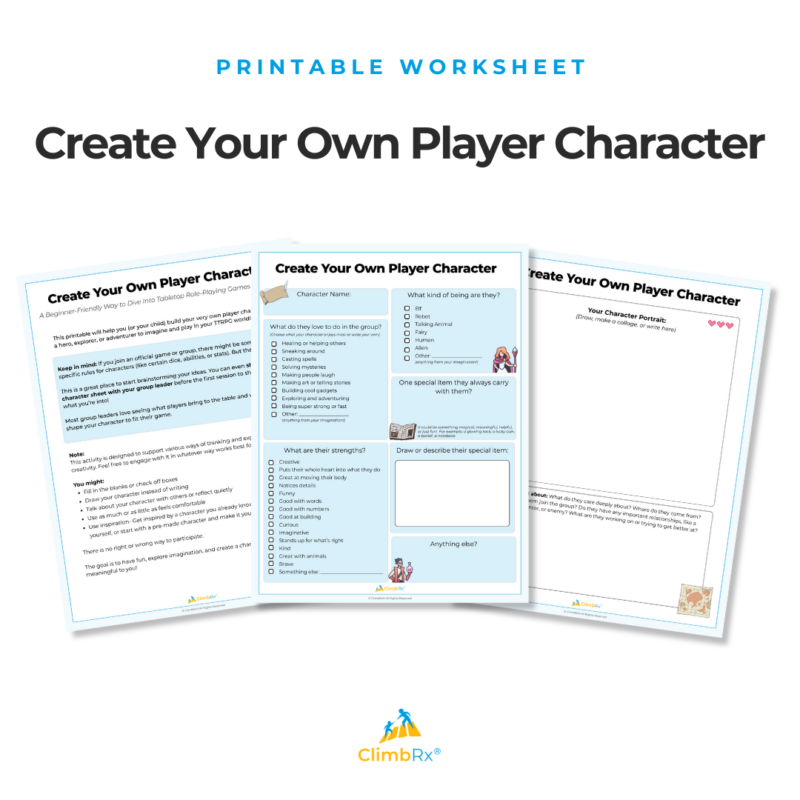
Create Your Own Player Character
Help new players build their first tabletop RPG character with this accessible, flexible worksheet. Designed to support different learning styles and communication preferences while building creative thinking and self-expression skills.
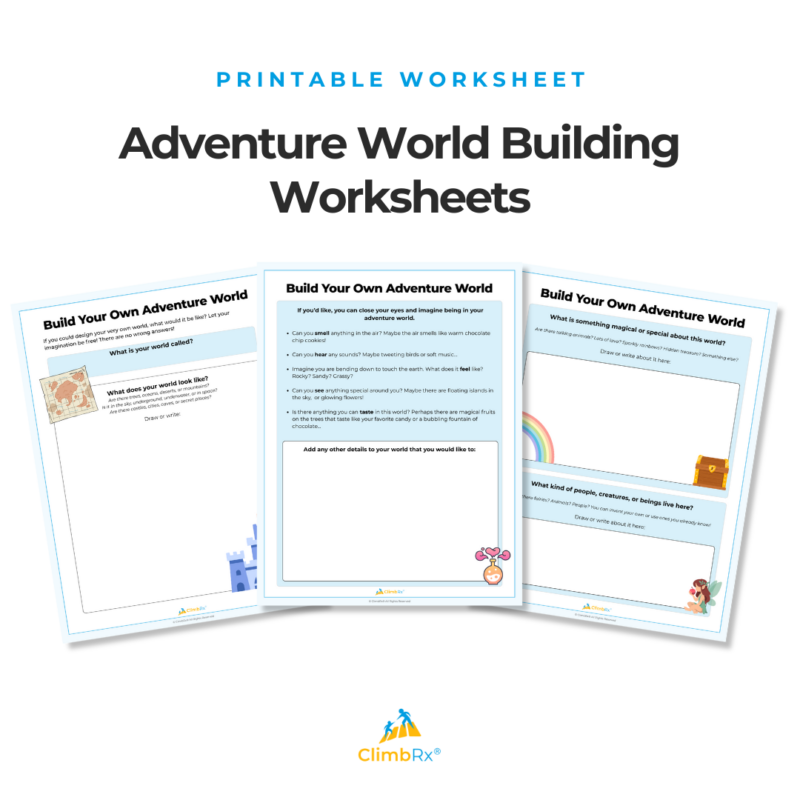
Adventure World Building Worksheet
Unleash creativity and world-building skills with this imaginative TTRPG activity. Perfect for young creators ready to design their own adventure settings while developing creativity, sensory awareness, and storytelling abilities.
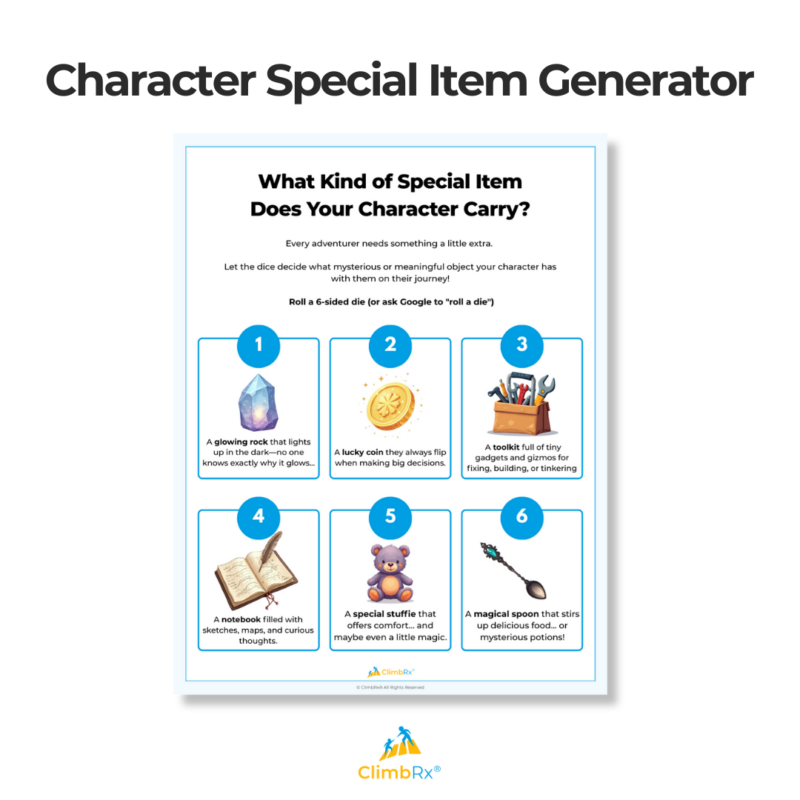
Character Special Item Generator
Spark creativity and character development with this dice-based activity for tabletop RPGs. Perfect for young adventurers learning to build rich, meaningful characters while practicing decision-making and storytelling skills.
Where to Start Looking for More Information
Whether it’s for you, your kid, or something fun to do together as a family, here are some ways to find or start a neurodivergent-friendly group:
Check Out Local Resources:
- Libraries or Community Centers – ask if they host youth D&D or TTRPG events
- Your Friendly Local Game Store – many offer events and groups for different skill levels!
- Therapy Centers or Clinics – some are starting to offer supported D&D and related groups!
- After-School Programs and Summer Camps – these types of groups are becoming more popular as interest grows!
Check Out an Online Platform:
- Meetup.com can be a good place to find a group. Use search terms like “beginner friendly,” “neurodivergent affirming,” “inclusive,” and “family friendly”
- StartPlaying.Games is an online platform that can help you find a professional Game Master, group, and game, depending on your wants and needs
- Roll20.net is another online-only platform for playing TTRPGs
- Facebook Groups or Discord – try searching groups like: D&D for Beginners, TTRPG Families, Local TTRPG or D&D Groups in [Your Area], Neurodivergent D&D group
Start Your Own Game
I know this can feel intimidating!
But you could totally start your own game! Many people start with a casual family or friend group and figure things out together. You don’t need to know all the rules—you can all learn together as you go!
Chat With A Game Master (GM)
A Game Master (or Dungeon Master in D&D) leads the game, sets the scene, and helps everyone have fun.
In my experience, Game Masters are typically super excited to “nerd out” with you and answer questions you have.
Here are some things you can ask your potential GM:
- “I’m totally new to this. Is this game beginner-friendly?”
- “Will there be a session zero?” (A session zero is a meeting before the first game where players create characters, talk about the story, and set expectations. It’s also the perfect time to set boundaries and share any content you’d like to avoid, like intense violence or certain phobias.)
- “Do you have experience working with neurodivergent players?”
- “How do you support different communication styles during sessions? Are there options to communicate other than the spoken word, like using voice-to-text, role play, text-only, virtually, etc.?”
- “What does a typical session look like?”
- “How long is a typical session?” “Are breaks built into the gameplay?”
- “Is this group more structured or more open-ended?”
- “Does the group focus more on creative storytelling or strategic battles?”
- “Is the tone more serious and immersive, or casual and silly?”
You don’t have to know everything to get started! TTRPGs are all about storytelling, creativity, teamwork, and fun!
The hardest part is often just getting started—but once you do, you might discover a whole new world of growth, connection, and adventure!
