
10 Fun Indoor Recess Activities That Kids Will Actually Like
Recess is a vital part of the school day, giving children the movement and brain breaks they need to stay focused and regulated. However, when outdoor play isn’t an option due to weather or other constraints, indoor recess activities provide an opportunity for kids to move, socialize, and reset their energy levels in a way that meets their needs.
For neurodivergent kids, including those with sensory processing challenges or ADHD, recess isn’t just a break—it’s a key part of self-regulation.
The right indoor activities can help them engage in movement, tap into creativity, and connect with peers, all while respecting their sensory and social differences.
In this article, we’ll cover:
- Why indoor recess matters and how it supports all learners.
- Physical indoor recess activities that encourage movement and self-regulation.
- Creative indoor recess activities to foster imagination and engagement.
- Social indoor recess activities that promote teamwork and connection.
- Sensory-friendly strategies to help neurodivergent children feel comfortable and included.
Here’s how to make indoor recess fun, active, and supportive for all children.
Disclaimer: This post contains affiliate links.
Why Indoor Recess Matters
Indoor recess isn’t just a backup plan—it’s an opportunity to introduce structured movement, creative expression, and social interaction in ways that outdoor recess sometimes can’t.
Especially for kids who need predictable routines or sensory accommodations, having engaging options ready can make all the difference in maintaining focus and well-being.
Physical Indoor Recess Activities
Movement is essential for kids’ physical and emotional regulation, but staying active indoors can be a challenge. These activities help burn off energy, improve focus, and support self-regulation, even in small spaces.
Simon Says – With a Twist
“Simon Says” is a classic game that engages listening skills, motor planning, and cognitive flexibility—and it can be adapted for different needs:
- Use big, whole-body movements (jumping jacks, stretching, balancing on one foot).
- Add proprioceptive activities like wall push-ups or pretend weightlifting.
- Introduce sensory-friendly cues (e.g., slower-paced commands for kids who process instructions differently).
Movement Dice Roll
Create a simple dice game where each number represents a different movement:
- 1 = 10 jumping jacks
- 2 = Crab walk across the room
- 3 = Spin in a circle 5 times (great vestibular input!)
- 4 = Push the wall for 10 seconds (deep pressure input)
- 5 = Balance on one foot for 15 seconds
- 6 = Free choice
Obstacle Course Challenge
Use classroom furniture creatively! Have kids:
- Crawl under desks (great for proprioceptive input!)
- Balance along a taped line (mimics a balance beam)
- Jump over pillows or books (safe and engaging movement)
7-Minute Animal HIIT Workout
Looking for a quick, high-energy activity that helps kids burn off extra energy while improving emotional regulation? Try this 7-Minute Animal HIIT Workout! This fun, structured movement routine mimics different animal movements, providing great proprioceptive and vestibular input while keeping kids engaged and active. You can get a free printable to go along with the workout video here.
Movement is essential for kids’ physical and emotional regulation, but staying active indoors can be a challenge. These activities help burn off energy, improve focus, and support self-regulation, even in small spaces.
Creative Indoor Recess Activities
Not all kids need high-energy play. For some, creative activities provide a much-needed mental and emotional reset while still being engaging.
Drawing and Art Challenges
Children of all ages can enjoy time set aside for drawing and coloring. Drawing is a versatile and accessible activity that can captivate children’s imaginations and enhance their artistic skills. These activities require minimal supplies and can be readily adapted to suit various age groups and skill levels.
Some drawing activities to incorporate into the school day as indoor recess activities include:
- Collaborative murals (a giant class art project)
- Drawing prompts (“Draw your dream playground!”)
- Mindful coloring (great for kids needing a calming activity)
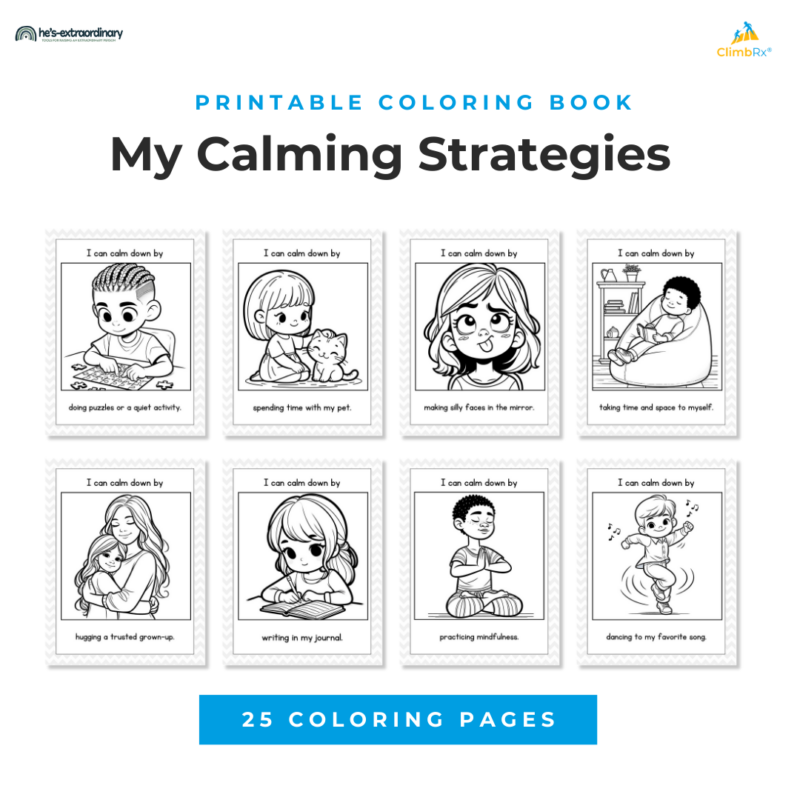
My Calming Strategies Coloring Book
25 printable coloring pages that illustrate various calming strategies that can help children with emotional regulation.
DIY Sensory Play
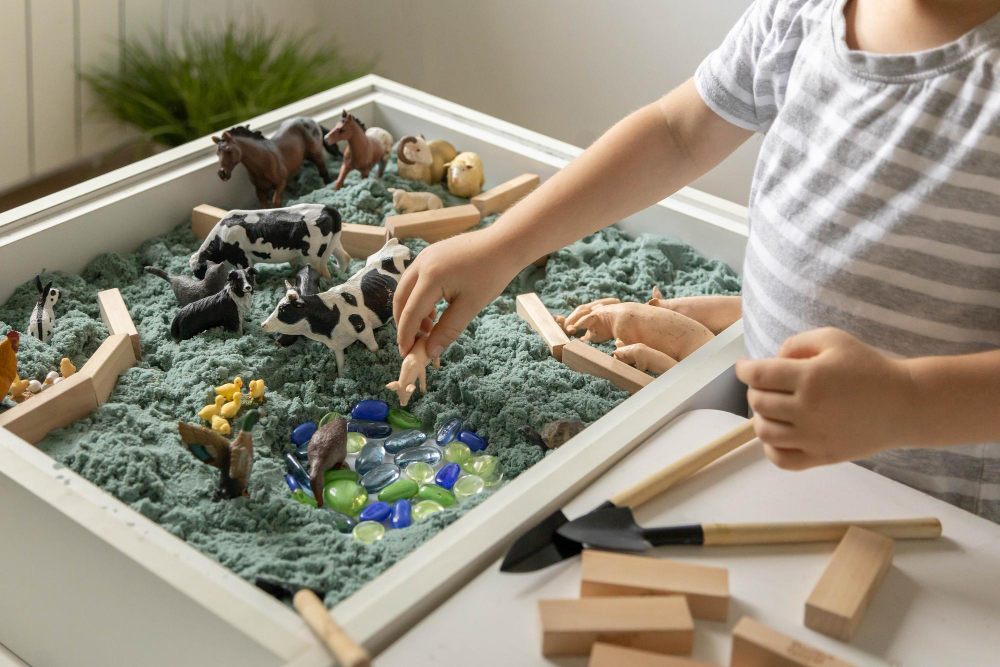
Set up low-mess sensory bins with kinetic sand, fidget toys, or textured objects. These provide a calming, engaging break, especially for kids who benefit from tactile input. Consider incorporating different textures, such as fabric swatches, water beads, or dried beans, to cater to a variety of sensory preferences. Rotating materials periodically keeps the experience fresh and engaging.
For a guided experience, offer themed sensory bins, such as:
- Ocean Exploration Bin (blue rice, small sea creature figurines, shells)
- Construction Zone Bin (kinetic sand, toy trucks, small building blocks)
- Dinosaur Sensory Bin (soil, leaves, sticks, smooth rocks, dinosaur figurines)
Adding scoops, tweezers, or small containers allows children to practice fine motor skills while engaging in sensory play.
Social Indoor Recess Activities
Recess is a time for connection and collaboration. These activities encourage teamwork and communication in a structured way.
Creative Storytelling Game
Have kids sit in a circle and build a story one sentence at a time, helping develop social communication and imagination.
To add variation, you can introduce storytelling prompts or themed challenges, such as “a space adventure” or “a mystery in the classroom.” Encourage students to use expressive voices and gestures to enhance engagement.
Board Games and Card Games
Games like Uno, Go Fish, Chess, and Checkers provide a predictable, structured way for kids to engage in friendly competition while practicing turn-taking and strategic thinking.
These games help develop patience, decision-making, and problem-solving skills in a fun and low-pressure environment.
For younger children, simple matching or color-based games like Candy Land or Memory can reinforce early learning concepts, while older kids might enjoy more complex strategy games like Battle Ships or Blokus.
Offering a variety of board and card games ensures that every child, regardless of their interests or abilities, can find an option that suits them.
Charades or Pictionary
A fun and expressive way for kids to use body language, creativity, and teamwork!
Charades help children practice nonverbal communication, quick thinking, and improvisation, while Pictionary encourages visual expression, problem-solving, and collaboration.
For added engagement, try variations such as:
- Themed Charades: Focus on categories like animals, sports, or emotions.
- Silent Storytelling: Kids act out a short sequence instead of a single word.
- Team Pictionary: Players work together to guess the drawing before the timer runs out.
Both games support social interaction, confidence-building, and flexible thinking, making them ideal for all learners, including neurodivergent kids who may benefit from structured social play.
Mindful Movement Breaks
Some kids benefit from gentle movement and mindfulness to help regulate their energy and emotions. Mindful movement breaks incorporate intentional activities that promote body awareness, focus, and relaxation.
These can include:
- Yoga stretches (child’s pose, butterfly stretch, or tree pose to promote relaxation)
- Breathing exercises (balloon breaths, box breathing, or guided visualization)
- Tai Chi-inspired slow movements to encourage focus and self-regulation
- Gentle, rhythmic activities like rocking side to side or controlled balancing exercises
This allows children who need a sensory reset to regulate before returning to class.

Indoor recess doesn’t have to be a compromise—it can be an opportunity to support movement, creativity, and social connection in an inclusive way.
By offering a mix of high-energy, calming, and social options, every child can find an activity that helps them reset and recharge.
