

A Gentle, Sensory-Aware Approach to Bedtime Routines
Bedtime battles can wear down even the most patient parents.
If your evenings often involve stalling, tears, or endless trips out of bed, you’re not alone. Sleep struggles are incredibly common—especially for kids with sensory sensitivities.
Fortunately, there are simple, practical steps you can take to make bedtime smoother, calmer, and a little more restful for everyone.
Disclaimer: This post contains affiliate links,
Having trouble getting your child to sleep?
You are not alone in this struggle!
Sleep is a vital part of the day. Without it, or with not enough of it, all other activities we participate in can be impacted. Our bodies and brains need to rest and reset. Sleep allows us to recuperate from the day we just had and build up energy for the next day.
Basically, sleep is a big deal!
You can learn more about the importance of sleep for overall health from the National Heart, Lung and Blood Institute here.
Many factors can impact a child’s ability to sleep. While it’s encouraged to talk to your doctor about your child and their sleep hygiene, there are some strategies you can try that can make bedtime less stressful and more peaceful.
Create a Sensory-Friendly Bedtime Routine
Do you have a set bedtime routine with calming activities?
A consistent routine can be beneficial in learning how to settle your body down for a good night’s sleep.
Calming activities can include:
- Reading books
- Listening to books
- Making up stories or sharing stories of the day are all bedtime connection opportunities.
My new favorite bedtime companion is the GlowMate Penny the Penguin!
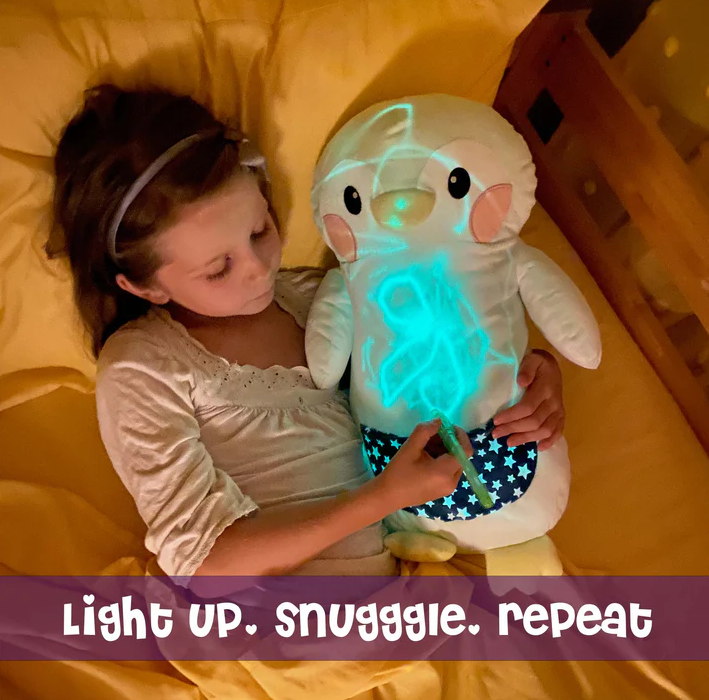
This is not only a super cute and cuddly companion, but with the blacklight pen provided, you can draw all over it!
Kids can draw pictures of what’s in their bellies or what’s in their brains, including any worries they have.
You can even draw a huge heart to say’ I love you’ before tucking Penny the Penguin in and closing your eyes.
You can learn more about GlowMates here (and use code GREG10 for an additional discount).
Bathtime Considerations
Very often, bathtime is the start of the bedtime routine.
While a warm bath can be very calming for some, it can be alerting for others, which is certainly not ideal when settling down for bedtime.
Temperature changes, such as going from a warm bathroom to a cold bedroom, can be very alerting for a sensory-sensitive child. Be mindful of significant temperature changes. If you are able, consider putting clothes on while still in the bathroom to prevent any temperature shocks or consider moving bathtime to another time of day.
Create a Sensory-Friendly Environment
While a darkened room makes sense for sleeping, a very dark room could present challenges for children trying to settle.
A very dark room could be scary for a child, but having a small amount of light in the room may help them with body awareness, so they know where their body is in relation to the edge of the bed or the wall or their plushies.
Things to consider:
- Does your child like a quiet room or white noise?
- Do they prefer to sleep with thick pajamas or a heavy blanket, or do they prefer to sleep with very little on (or anything at all)?
- Honor their preferences (they may be different from yours).
For kids who need a little extra sensory input, Sensory Sheets can be an amazing addition to their bed.
When to Consider Outside Support
If you feel that your child has sensory processing challenges that are impacting their ability to regulate or get a good night sleep, you may consider consulting with an occupational therapist to learn more about your child’s sensory preferences and their ability to self-regulate and strategies to make bedtime a peaceful time of day that doesn’t take all night!
Good luck, and good night!