
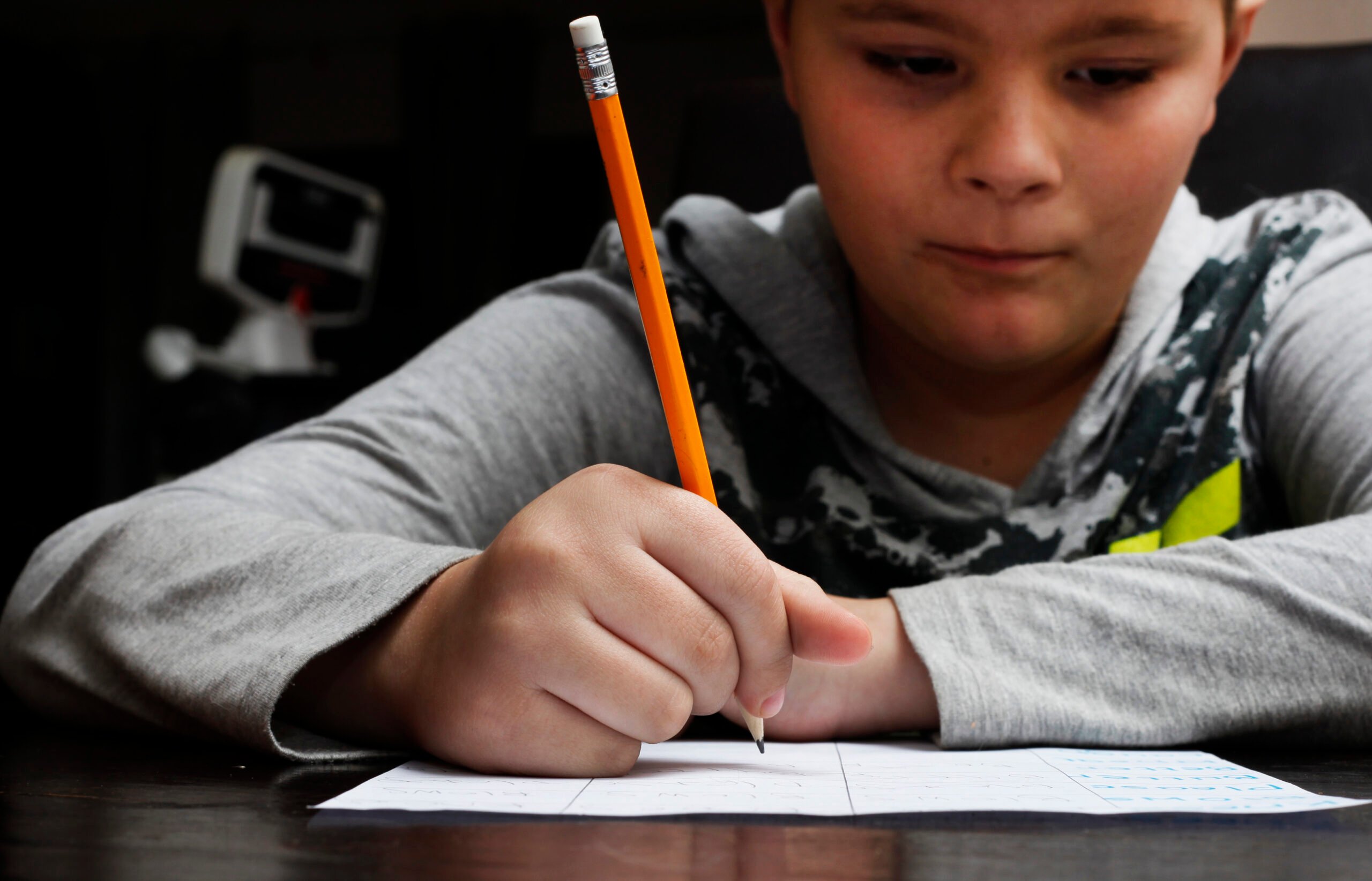
Posture Before Pencil: How Body Position Impacts Writing Success
Believe it or not, as an Occupational Therapist, I have seen many children in a variety of sitting positions for writing over the years, and each one tells a different story about what the child might need.
Some are seated at the wrong height, and others are leaning over in precarious positions. The fact that posture correction is not always addressed can be a detriment to handwriting output.
For neurodivergent kids, posture isn’t just a matter of sitting still; it’s sensory, motor, and attention practice that looks different for every child. When kids are properly seated, they are better engaged, paying attention, and ready to listen and learn (provided their sensory needs are met).
If their grasp is comfortable, they’re more likely to engage and participate in writing activities, as discomfort won’t be a barrier to learning.
In this article, we’ll look at why proper posture is essential for handwriting success, how to create an optimal writing environment, the developmental stages of pencil grasp, and practical strategies you can use at home or school to help your child build the foundation for confident, comfortable writing.
Disclaimer: This post contains affiliate links
Why Posture Problems Occur in Children
So first, we need to start with why. Why is your child/student sitting slouched? Why are they leaning over? Why do they sit on their feet? Why do they hold their pencil that way?
Understanding underlying issues can help their handwriting, without even lifting a pencil.
The Role of Proprioception and Body Awareness
Proper posture requires constant body awareness. Maintaining posture requires the child to know where their body is in space. That is called proprioception.
In addition, they have to be able to think about how to correct it and adjust themselves when they feel off balance. The process of sitting still can overwhelm their thinking and interfere with the automatic process of handwriting.
Do you ever walk around while you talk on the phone? I know I do. Movement can actually help us focus, so sometimes we need to provide children with seating that allows movement yet keeps them in one spot.
When your child or student is seated, they might find that the chair is too hard, or they can feel a wrinkle in their clothing, so sensory sensitivities can also play a part in posture.
Creating the Optimal Writing Environment
How can you help? First of all, let’s talk about the environment.
Lighting Considerations for Better Handwriting
The lighting in a room plays an important part in handwriting. If it’s too dark, there can be eye strain, and if it’s too bright, that can cause headaches.
Light sensitivity affects 5-20% of the general population.
To reduce glare on the paper, you can:
- Tilt the paper by using a slant board
- Use task lighting
- Try a baseball hat to reduce overhead glare
- Experiment with different colored paper or overlays
The stark contrast of white paper and black ink can be tiring for a student’s eyes, and fluorescent or bright LED lighting can exacerbate discomfort, leading to reduced attention and avoidance.
The 90/90/90 Rule for Proper Seating
While the traditional 90/90/90 rule (hips, elbows, and knees at 90 degrees) gives us a starting point, we now know that many children – especially neurodivergent kids – write better with flexibility and movement options.
Here’s what to consider:
General guidelines:
- Hips at approximately 90 degrees, but some kids work better slightly reclined or perched forward
- Elbows are comfortable at their sides, roughly 90 degrees when writing
- Knees around 90 degrees with feet supported – but some kids need to stand, kneel, or sit cross-legged
What matters most:
- Your child’s feet should have support (floor, footrest, band around the chair, or wrapped around chair legs if that helps them feel grounded)
- Their shoulders should be relaxed, not hunched up by their ears
- They can see their paper without straining their neck
- The table height allows their arms to rest comfortably (usually 1-2″ below bent elbow)
Remember: Some children focus better when they can rock, bounce, or shift positions. If your child needs to stand at a counter, sit on the floor, or use a wobble cushion, that’s perfectly fine. The “best” posture is one that supports your child’s regulation and allows them to engage with their work.
(For computer work: aim for the screen at or slightly below eye level, about 12-18″ away, with regular movement breaks.)
Understanding Proper Pencil Grasp Development
Proper posture also includes proper grasp. But what is a proper grasp?
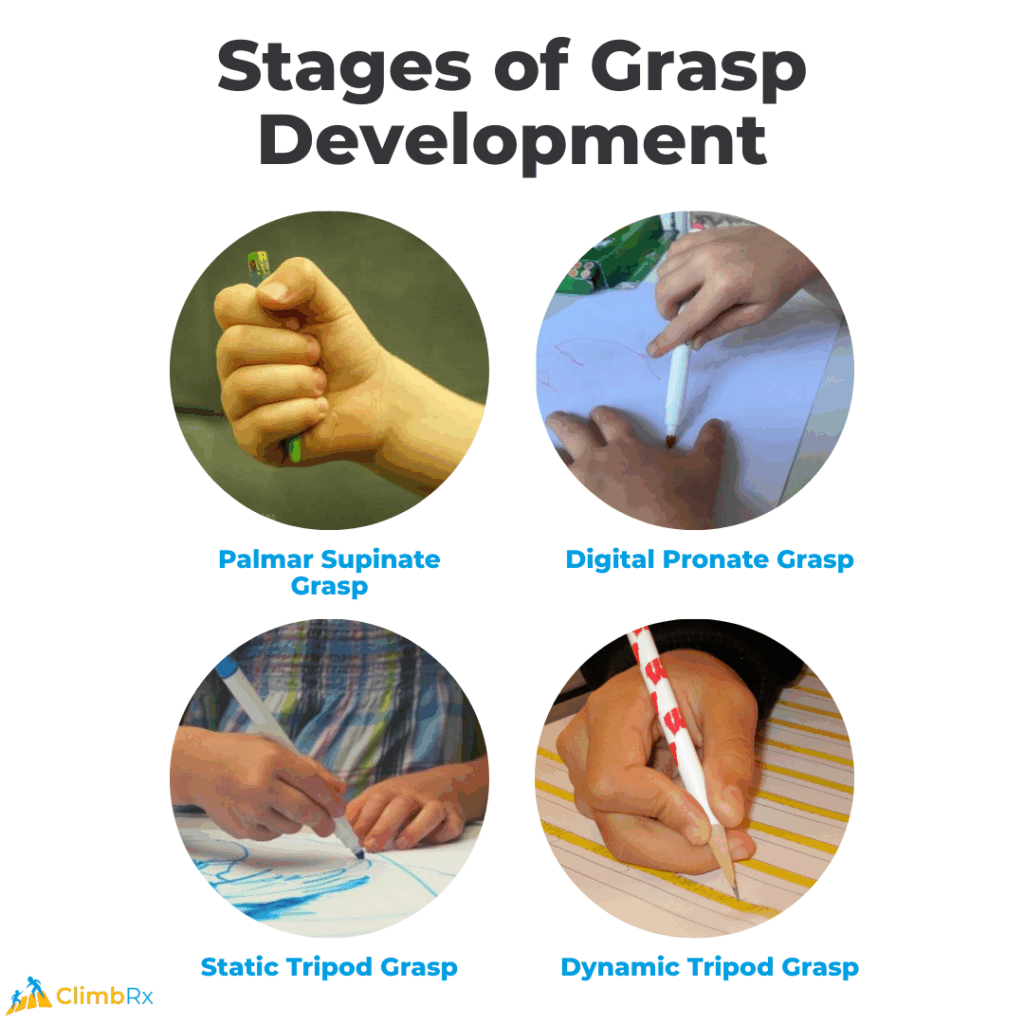
Developmentally, the progression of grasp is as follows:
Stages of Grasp Development
1. Palmar Supinate Grasp (12-15 months): When you give your toddler a crayon, they’ll typically hold it in their palm and use their whole arm to move it across the paper. At this stage, they’re not using their wrist or fingers to control the movement – it’s all coming from the shoulder and arm.
2. Digital Pronate Grasp (2-3 years): At this age, when your child picks up a crayon or marker, their fingers will point down toward the paper with their wrist turned inward. They’re still using mostly arm and shoulder movements to write, but you’ll start to see more control developing.
3. Static Tripod or Quadrupod Grasp (3.5-4 years): You’ll notice your child now holds writing tools with either three fingers (tripod) or four fingers (quadrupod) touching the pencil. The word “static” means they’re keeping their fingers locked in position while moving the pencil with their wrist and arm – the fingers aren’t moving yet.
4. Dynamic Tripod or Quadrupod Grasp (4.5-6 years): This is the mature grasp we’re working toward. When your child writes or draws, they hold the pencil with three or four fingers and can now move it using small, controlled finger movements. Their wrist, arm, and shoulder stay stable while their fingers do the work.
The Importance of Hand Development
In a dynamic tripod or quadrupod grasp, your child/student can isolate the sides of the hands and has a palmar arch (which is the natural rounded shape of the palm that is necessary for a controlled grip on a writing tool).
As the hand muscles develop and kids gain more control, they become more ready to use a pencil comfortably and efficiently.
There is:
- The skilled side of the hand: thumb, index, and middle finger for precision
- The power side of the hand: the ring and pinky finger that provides strength and stability
Arches shape the hand to grasp differently shaped objects, direct the skilled movements of the fingers, and adjust the power of grasps. The arch in the palm is important for grasping a pencil in handwriting.
A flat grasp might mean they haven’t found a comfortable or efficient way to hold their pencil, yet. One notable way to test for a palmar arch is to use two dice and see if the child can shake them in their hand and make them click.
Practical OT Strategies for Home
So, how can you help at home? Let’s look at some real-world OT strategies I use all the time.
Posture Assessment and Adjustment
Posture Checklist: Assess your child’s sitting posture and identify areas for improvement. One way to adjust for table height is to raise/lower the table or to raise/lower the seating.
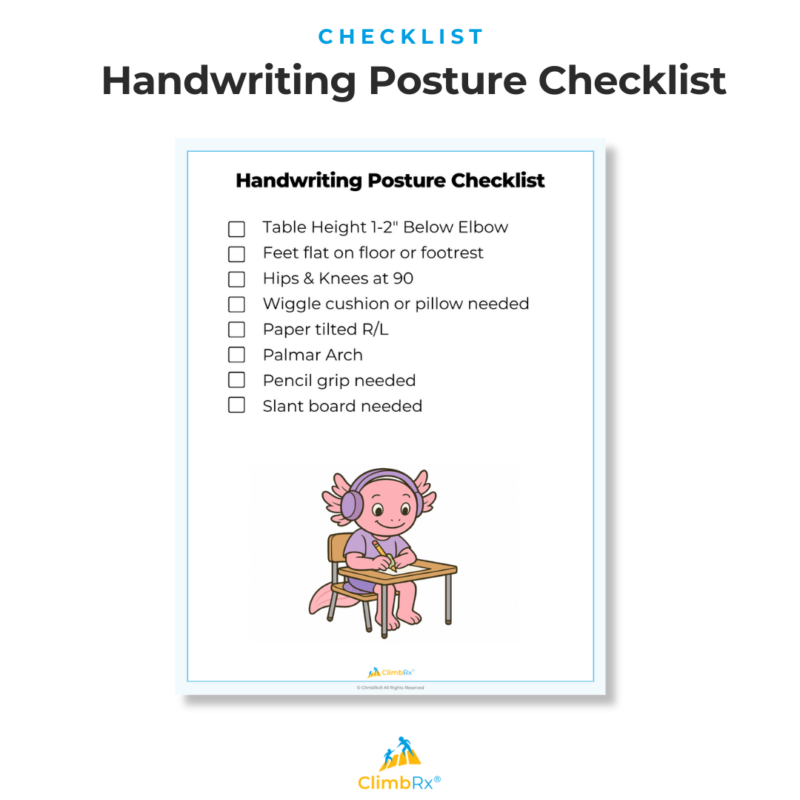
Handwriting Posture Checklist
Free printable checklist to help parents and educators quickly assess a child’s writing posture. This one-page PDF features 8 essential checkpoints for optimal handwriting setup, including table height, seating position, and grip assessment. Perfect for home or classroom use.
Recommended adjustments:
- Use a wiggle cushion for seating
- Use books, yoga blocks, or a foot rest to support the legs
- To raise the seat, use pillows or folded towels
Positive Reinforcement Tip: Using a friendly encouragement cue that you and your child agree on can help improve confidence and follow-through. For example, maybe instead of saying “please sit up straight,” you can sing a song and say “Sit Smart,” and let your child respond with “Write strong!”
Core Strengthening Activities for Better Posture
You can help posture by providing exercises or play that strengthen the core. One trick I love using is activities like sitting upright, balancing on a round ball, and adjusting for movement circles and wiggles.
Movement Activities:
- Tummy time play or games
- Tall kneeling activities
- Animal Walk Races: Bear Walk, Frog Jump, Crab walk (add item on the belly), scooter boards, Penguin waddle, inchworm, snake slither, bunny hops, duck squat walk, elephants, and gorillas
- Wheelbarrow races
- Obstacle courses
- Yoga poses with child-friendly names.
- Fitness ball challenges
- Ball toss when sitting
- Over the head, under the legs, side to side relay races
- Freeze dance
- Balance activities
- Stepping stones or motor mats
Movement Break Guidelines: Be sure to offer movement breaks when seated for long periods of time, such as jumping jacks, wiggle dances, or stretching after 5-10 minutes of writing tasks.
If your child is seeking movement while seated, you can offer a wiggle cushion or a Theraband around the legs for fidgeting.
Grasp Improvement Strategies
Some of my favorite OT strategies for improving grasp are working with:
- Broken crayons
- Mini markers
- Golf pencils
- Triangle crayons
These tools encourage a more functional tripod grasp. Long, thick tools are often held by a fisted posture, but can be supported with tools like a pencil grip or verbal cues if the child is open to trying them.
Activities to Strengthen the Palmar Arch
In my sessions, kids’ favorite activities include using tongs or tweezers, working with putty, or playing with a tennis ball buddy.
Working on a vertical surface encourages wrist extension as compared to working on a table top or tablet.
Palmar Arch Strengthening Activities:
- Clay or Play-Doh, roll on the table
- Putty activities: ball, pancake, hot dog, worm, snail
- Hide items in putty, cut it with a knife or pizza cutter
- Tongs to move puff balls from one bowl to another
- Toothpick designs with pea-sized putty balls
- Holding a handful of objects in a cupped palm
- Squirreling items like mini erasers
- Pour rice or sand into your child’s hand and “see how much you can hold”
- Paper-tearing – use newspaper and crumple into balls
- Spray bottles
- Hole punches
- Cutting cardstock
- Towel scrunching
- Baggie sealing
- Tray carry activities
Conclusion: Building a Strong Foundation for Writing Success
When we think about handwriting, it’s easy to focus on the fingers and forget the foundation. But posture, positioning, grasp, and body support are the true starting points for writing success.
By helping kids sit with strength, grasp with confidence, and move with purpose, we’re not just improving their handwriting—we’re giving them the tools to feel capable and in control.
Writing should never feel like a battle with the body. When we build from the foundation, we empower children to write with less frustration and more freedom.
Recommended Resources
Products to Support Writing Development
- Wiggle cushions
- Wedges
- Pencil grips
- Foot rests
- Motor mats
- Slant boards
- Easels
- Putty
- LegiLiner
