
Big Talks, Little Talks
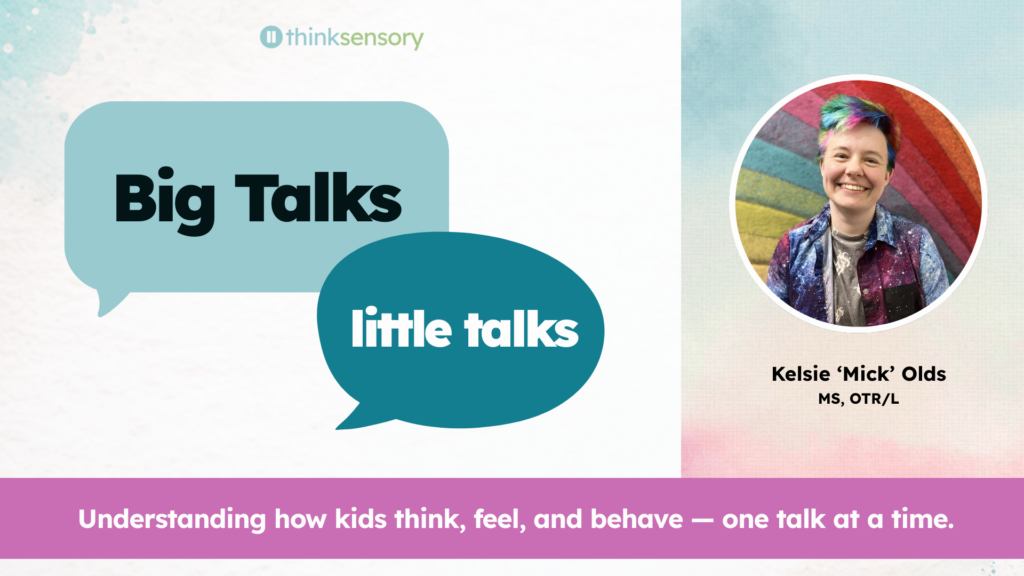
An eight-module video course thats helps you understand how kids think, feel, and behave by addressing distinct topics related to neurodiversity and child development. Every module includes a “Big Talk” for adults and a “Little Talk” for children.
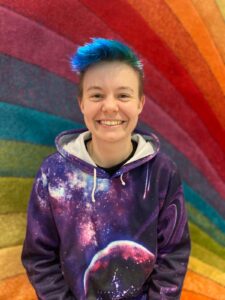 Kelsie Mick Olds, MOT OTR/L
Enrollment Options

Professional Track
Includes a certificate of completion for 1.30 General CEUs / 13.0 Contact Hours. Designed for social workers, educators, and early childhood educators looking to earn CE credit for professional development.
This course provides 1.30 General CEUs or 13 Contact Hours

Personal Track
Designed for parents, caregivers, and educators looking to deepen their knowledge and understanding and learn practical strategies for supporting neurodivergent children.
Professional Track
- Big Talks Little Talks video course
- PDF Companion Notes
- Learning outcome assessment
- Access to the course discussion group
- Certificate of completion for 1.30 General CEUs/ 13 contact hours
Personal Track
- Big Talks Little Talks video course
- PDF Companion Notes
Meet Your Instructor
Kelsie Mick Olds, MOT OTR/L
Mick is an occupational therapist working both on- and offline to share knowledge widely about the ways that children grow, develop, and learn. Mick is passionate about play as the core meaningful occupation that underlies childhood, and about equipping adults with the education and practical tools they need to defend children’s right to play.
Mick has a Master of Occupational Therapy degree from the University of Oklahoma and has worked primarily in schools, as well as consulting with teachers, therapists, and parents to advocate on children’s behalf. Mick blogs as The OccuPLAYtional Therapist.
About This Course
Big Talks, Little Talks
Understanding How Kids Think, Feel, and Behave, One Talk at a Time.
Big Talks, Little Talks is a full eight-module video course series that walks through the foundational topics shaping how children think, feel, and behave. Created by Kelsie Mick Olds, OTR/L, the series brings together the core concepts an adult needs in order to interpret children's behavior accurately and respond in ways that actually help.
The eight modules build on each other. Regulation comes first, because everything else depends on understanding how bodies and brains get into and out of a workable state. Sensory processing comes next, giving you the lens for reading what a child's behavior is communicating. From there, the series moves through neurodiversity, the vestibular and proprioceptive senses, power and autonomy, adapting tricky tasks, sensory mismatch in shared spaces, and the developmental role of play.
By the end of the full series, you will have a complete framework you can return to any time a child's behavior has you stuck.
Completing the full series qualifies for 1.30 CEUs (13.0 contact hours) of continuing education credit.
What's Inside
Feeling All the Feelings: Co-, Dys-, and Self-Regulation
A three-part framework for understanding regulation as the match between a person's energy, their environment, and the task in front of them. Covers how dysregulation shows up across high-energy and low-energy states, and how co-regulation lays the neurological groundwork for eventual self-regulation.
Making Sense of Behavior: The Basics of Sensory Processing
An introduction to the eight sensory systems and four sensory processing profiles. Covers the difference between threshold and tolerance, and introduces a practical framework for identifying the sensory causes behind what you are seeing.
Living in a Neurodiverse World
Defines the terms that get used constantly and inconsistently (neurodiverse, neurodivergent, neurotypical, neurominority), traces why diagnosis rates keep climbing, and explains how universal design and self-identification shape neuroaffirming practice.
Moving & Soothing: The Power of Proprioceptive & Vestibular Input
A deep dive into the two bonus senses that shape regulation. Introduces proprioception as the universal regulator, with a three-subtype framework (exertion, impact, pressure) that changes what strategies you reach for and how well they work.
Kids Don't Want Your Power. They Want Their Own.
Distinguishes between self-autonomy and power over others, examines the structural disempowerment children experience daily, and offers strategies for sharing power meaningfully. Also addresses how adults' own history shapes how they read children's bids for autonomy.
100 Ways to Do Hard Things: How to Alter, Adapt, & Accommodate Tricky Tasks
A practical framework of categories you can change (position, tool, timing, people, sensory components, and more) when a self-care task is not working. Also addresses the fear-based thinking that gets in the way of trying something different.
Sensory Processing & Sensory Mismatch
What happens when two people in the same space have opposing sensory needs. Introduces the distinction between proxy and personal senses and walks through four practical tools for managing mismatch without defaulting to whoever has the most authority in the room.
Protecting the Power of Play
The research on why play outperforms direct instruction for young children, the foundational skills kids need before academics are even possible, and practical strategies for protecting and supporting play at home and in classrooms.
How Big Talks and Little Talks Work Together
Every module includes two videos. The Big Talk (about one hour to one hour and twenty-five minutes) is the professional development component for adults. The Little Talk (about fifteen to twenty-four minutes) gives kids accessible language for the same concepts in a voice designed for them.
The Little Talks are flexible by design. You get to decide how they fit the child or client in front of you.
Ways to use the Little Talks
- Show it directly. Watch with a child or client, pause as needed, and let Kelsie do the explaining.
- Break it into chunks. If a child will not sit through the full length, watch five or six minutes, talk about it, and come back for more the next week.
- Watch it yourself and explain it in your own words. For kids who will not watch a video at all, watching the Little Talk yourself gives you the language, examples, and framing to deliver the concept in your own voice, in the moment it matters.
Who Is This Course For?
This course is designed for therapists, parents, caregivers, educators, early childhood educators, social workers, and anyone who supports neurodivergent children and wants a complete, practical, neuroaffirming framework to work from.
If you have ever felt like you were missing something essential about how to read a child's behavior, or like the strategies you were taught do not actually hold up in real situations, this is the series that closes that gap.
Course Details
Select a track to view what's included.
Course Modules
Module 1 - Regulation
1:24:18Big Talk – Feeling All the Feelings: Co-, Dys-, and Self-Regulation
This Big Talk explores the foundations of regulation and dysregulation in children and adults. Presenter Kelsie Olds, OTR/L, introduces a three-part framework defining regulation as the match between a person’s energy, their environment, and the activity they are attempting. The video covers how dysregulation presents across a range of energy states, how co-regulation lays the neurological groundwork for eventual self-regulation, and why many of the instinctive regulation tools children reach for are routinely restricted in home and school settings. The talk closes with practical strategies for caregivers and practitioners supporting dysregulated children — including how to identify and maintain their own regulation in the process.
Little Talk – Why Do I Calm “Down” Instead of “Up”?
This Little Talk speaks directly to kids about what regulation actually means — that energy being too high or too low is a mismatch, not a character flaw. Kelsie introduces three ways to solve that mismatch, gives kids language to identify what’s happening inside their own bodies, and encourages them to bring that language to a trusted adult.
Module 2 - Sensory Processing
1:12:03Big Talk – Making Sense of Behavior: The Basics of Sensory Processing
This Big Talk introduces the foundations of sensory processing and how it shapes children’s behavior. Presenter Kelsie Olds, OTR/L, explains the four sensory processing profiles (seeker, avoider, sensitive, misser) and the eight sensory systems, and introduces a two-axis model for understanding sensory profiles. The video distinguishes between threshold (the level at which sensory input is noticed) and tolerance (the level at which it becomes bothersome), and between passive and active strategies for meeting sensory needs. The talk reframes common “behavior problems” as children’s attempts to meet sensory needs and offers a practical “more of / less of” framework for identifying possible sensory causes behind what children are doing.
Little Talk – How Do My Senses Feel?
This Little Talk introduces kids to the eight senses (the five traditional senses plus proprioception, vestibular, and interoception) and the four sensory processing styles (seeker, avoider, misser, and sensitive). Kelsie explains that people can fit into different categories for different senses or at different times of day, and that none of these styles are wrong. The video gives kids language to describe what is happening inside their bodies and to tell more accurate stories about themselves and others.
Module 3 - Neurodiversity
1:19:03Big Talk – Living in a Neurodiverse World
This Big Talk provides an introduction to neurodiversity as a concept and a movement. Presenter Kelsie Olds, OTR/L, explains key terminology (neurodiverse, neurodivergent, neurotypical, neuro minority) and traces the history of diagnoses like autism and ADHD, noting that both were first described less than a century ago. The video addresses common concerns about rising diagnosis rates, explaining how evolving diagnostic criteria, increased awareness, and barriers to access (financial, racial, gender-based, and cultural) all shape who receives a formal diagnosis. Kelsie discusses universal design as a way to build more inclusive environments and explains why self-identification often provides meaningful information about a person’s experience, even without formal diagnosis. The talk closes with an invitation to approach differences with curiosity and to believe people when they describe what it is like to live inside their own brain.
Little Talk – Some Types of Brains
This Little Talk introduces kids to the concept of neurodivergent brains using an analogy about stairs and accessibility. Kelsie explains that the world is often built for one type of person, leaving others out, and that this applies to brains just like it applies to bodies. The video describes several types of brains (ADHD, dyslexic, hyperlexic, anxious, autistic) and acknowledges that people have different experiences of whether their brain feels disabling to them. The talk closes with two messages: you are completely unique and your brain is wonderful, and you are not alone because there are people who will understand you.
Module 4 - Proprioception and Vestibular Senses
1:17:09Big Talk – Moving & Soothing: The Power of Proprioceptive & Vestibular Input
This Big Talk introduces the vestibular and proprioceptive senses and their role in regulation. Presenter Kelsie Olds, OTR/L, explains how the vestibular sense responds to movement and why rhythmic versus irregular input produce opposite regulatory effects. The video introduces proprioception as the universal regulator and presents a three-subtype framework — exertion, impact, and pressure — for understanding how and why people seek different types of proprioceptive input. Kelsie connects proprioceptive subtype to emotional state and explains why crossing subtypes in intervention may not meet a child’s actual need. The talk closes with practical strategies for incorporating vestibular and proprioceptive input in classroom, therapy, and home settings.
Little Talk – My Brain Knows Playing is Smart
This Little Talk introduces kids to the vestibular and proprioceptive senses as two of the body’s bonus senses beyond the familiar five. Kelsie uses a tiny cup of water as a simple image for how the vestibular sense works, and explains that proprioception — felt in the muscles, bones, and joints — is something bodies reach for instinctively to feel settled and regulated. The talk closes with an encouragement for kids to trust what their bodies are telling them and to bring that to a trusted adult who can help them find safe ways to meet those needs
Module 5 - Power
1:24:43Big Talk – Kids Don’t Want Your Power, They Want Their Own
This Big Talk examines the role of power and autonomy in children’s development and behavior. Presenter Kelsie Olds, OTR/L, distinguishes between self-autonomy power and power over others, and explains why children’s bids for control are frequently misread as defiance or manipulation. The video explores the structural disempowerment children experience daily and how chronic control shapes behavior and self-concept over time. Kelsie examines how adults’ own emotional history and current resources affect the way they interpret children’s behavior, and closes with practical strategies for sharing power meaningfully — including naming the subtext, offering genuine choice, supporting child-led extrinsic motivation, and scaffolding collaboration
Little Talk – My Brain Knows Playing is Smart
This Little Talk introduces kids to a different kind of power — not muscles or weapons, but the ability to make a plan, access the tools to carry it out, and get permission to make it happen. Kelsie explains why it makes sense to feel frustrated, angry, or defeated when any of those three things is missing, and validates that the urge to do something big and physical with that feeling is a normal body response, not a character flaw. The talk closes with strategies for expending that energy safely, ideas for talking to a trusted adult when things feel out of control, and an encouragement to find and protect the things in life that already make them feel powerful.
Module 6 - Adaptation
1:21:57Big Talk – 100 Ways to Do Hard Things: How to Alter, Adapt, & Accommodate Tricky Tasks
This Big Talk offers a practical framework for adapting self-care tasks that are not currently working for a child or family. Presenter Kelsie Olds, OTR/L, situates adaptation within the broader field of occupational therapy, explaining why altering, adapting, and accommodating a task carries equal weight to other OT approaches — not lesser. The video walks through a framework of categories of change including position, location, tool, length and time, people, routine, sensory components, and play, and applies each category in depth to real self-care tasks. Kelsie also addresses the voice of fear that can prevent caregivers from trying something different, and offers grounded counter-statements to the most common fear-based beliefs that get in the way of problem-solving.
Little Talk – Easy for You, Hard for Me
This Little Talk introduces kids to the idea of adapting — changing how something is done so it works better for the person doing it. Kelsie uses everyday examples like morning routines and toothbrushing to show that there is no single right way to do most things, and walks through categories kids can use to generate their own ideas, including changing the location, position, tool, timing, people, or how fun something is. The talk closes with honest encouragement for kids who hit a wall where no adaptation works — including how to find an adult who will actually believe them, and how to give themselves grace when their body or brain says it just can’t today.
Module 7 - Sensory Mismatch
1:04:53Big Talk – Sensory Processing and Sensory Mismatch
This Big Talk introduces the concept of sensory mismatch and examines what happens when two people in the same space have opposing sensory needs. Presenter Kelsie Olds, OTR/L, opens with real examples across classroom, therapy, and home settings, and explains why defaulting to the adult’s preference is not sufficient problem solving. The video introduces a distinction between proxy senses and personal senses, and walks through four practical tools for managing mismatch across a range of environments. The talk closes with a reminder that two different sensory needs do not automatically create a competition, and that adults are partners in the problem-solving process rather than the deciding vote.
Little Talk – Making My “Bubble” the Way I Like It
This Little Talk introduces kids to the concept of sensory mismatch — what happens when two people sharing a space need opposite things from their senses. Kelsie explains that everyone’s sensory experience is personal and unique, and walks through practical strategies for protecting your own bubble without popping someone else’s, including finding ways to get your needs met that don’t affect the people around you. The talk closes with an encouragement for kids to build language for what they feel inside their bodies, to seek out their own space when they need full control over their environment, and to believe themselves when their body tells them something.
Module 8 - The Power of Play
1:20:49Big Talk – Protecting the Power of Play
This Big Talk makes the case for protecting child-led play as a developmental necessity, not a filler activity. Presenter Kelsie Olds, OTR/L, examines the research on how children learn through play versus direct instruction, walks through the foundational physical and social-emotional skills that must develop before children are ready for academic learning, and explains the developmental sequence through which those skills are built. The video introduces a framework of play types and maps each to the preschool skills it develops, then closes with practical strategies for bringing movement and sensory-rich activity into classroom and home settings — and for supporting kids when developmental stages have been missed.
Little Talk – My Brain Knows Playing is Powerful
This Little Talk introduces kids to the idea that playing is how human bodies and brains actually grow and develop. Kelsie explains the connection between physical play and how bodies build strength from the core outward, and uses the analogy of cutting a path through a jungle to show how the brain builds and strengthens new skills through repetition. The talk closes with practical encouragement for kids to find ways to bring movement and play into learning, and a reminder that making time for the things that bring them delight is not something to grow out of.
What's Included
Course Content
Registration Information
To register, select your preferred course option on this page and complete your purchase. Access to all course materials is granted immediately upon completion of payment. If you require accommodations or have special needs requests, please contact us at ce@thinksensory.com. Groups of 6 or more can inquire about group rates at the same address.
Course Modules
Module 1 - Regulation
1:24:18Big Talk – Feeling All the Feelings: Co-, Dys-, and Self-Regulation
This Big Talk explores the foundations of regulation and dysregulation in children and adults. Presenter Kelsie Olds, OTR/L, introduces a three-part framework defining regulation as the match between a person’s energy, their environment, and the activity they are attempting. The video covers how dysregulation presents across a range of energy states, how co-regulation lays the neurological groundwork for eventual self-regulation, and why many of the instinctive regulation tools children reach for are routinely restricted in home and school settings. The talk closes with practical strategies for caregivers and practitioners supporting dysregulated children — including how to identify and maintain their own regulation in the process.
Little Talk – Why Do I Calm “Down” Instead of “Up”?
This Little Talk speaks directly to kids about what regulation actually means — that energy being too high or too low is a mismatch, not a character flaw. Kelsie introduces three ways to solve that mismatch, gives kids language to identify what’s happening inside their own bodies, and encourages them to bring that language to a trusted adult.
Module 2 - Sensory Processing
1:12:03Big Talk – Making Sense of Behavior: The Basics of Sensory Processing
This Big Talk introduces the foundations of sensory processing and how it shapes children’s behavior. Presenter Kelsie Olds, OTR/L, explains the four sensory processing profiles (seeker, avoider, sensitive, misser) and the eight sensory systems, and introduces a two-axis model for understanding sensory profiles. The video distinguishes between threshold (the level at which sensory input is noticed) and tolerance (the level at which it becomes bothersome), and between passive and active strategies for meeting sensory needs. The talk reframes common “behavior problems” as children’s attempts to meet sensory needs and offers a practical “more of / less of” framework for identifying possible sensory causes behind what children are doing.
Little Talk – How Do My Senses Feel?
This Little Talk introduces kids to the eight senses (the five traditional senses plus proprioception, vestibular, and interoception) and the four sensory processing styles (seeker, avoider, misser, and sensitive). Kelsie explains that people can fit into different categories for different senses or at different times of day, and that none of these styles are wrong. The video gives kids language to describe what is happening inside their bodies and to tell more accurate stories about themselves and others.
Module 3 - Neurodiversity
1:19:03Big Talk – Living in a Neurodiverse World
This Big Talk provides an introduction to neurodiversity as a concept and a movement. Presenter Kelsie Olds, OTR/L, explains key terminology (neurodiverse, neurodivergent, neurotypical, neuro minority) and traces the history of diagnoses like autism and ADHD, noting that both were first described less than a century ago. The video addresses common concerns about rising diagnosis rates, explaining how evolving diagnostic criteria, increased awareness, and barriers to access (financial, racial, gender-based, and cultural) all shape who receives a formal diagnosis. Kelsie discusses universal design as a way to build more inclusive environments and explains why self-identification often provides meaningful information about a person’s experience, even without formal diagnosis. The talk closes with an invitation to approach differences with curiosity and to believe people when they describe what it is like to live inside their own brain.
Little Talk – Some Types of Brains
This Little Talk introduces kids to the concept of neurodivergent brains using an analogy about stairs and accessibility. Kelsie explains that the world is often built for one type of person, leaving others out, and that this applies to brains just like it applies to bodies. The video describes several types of brains (ADHD, dyslexic, hyperlexic, anxious, autistic) and acknowledges that people have different experiences of whether their brain feels disabling to them. The talk closes with two messages: you are completely unique and your brain is wonderful, and you are not alone because there are people who will understand you.
Module 4 - Proprioception and Vestibular Senses
1:17:09Big Talk – Moving & Soothing: The Power of Proprioceptive & Vestibular Input
This Big Talk introduces the vestibular and proprioceptive senses and their role in regulation. Presenter Kelsie Olds, OTR/L, explains how the vestibular sense responds to movement and why rhythmic versus irregular input produce opposite regulatory effects. The video introduces proprioception as the universal regulator and presents a three-subtype framework — exertion, impact, and pressure — for understanding how and why people seek different types of proprioceptive input. Kelsie connects proprioceptive subtype to emotional state and explains why crossing subtypes in intervention may not meet a child’s actual need. The talk closes with practical strategies for incorporating vestibular and proprioceptive input in classroom, therapy, and home settings.
Little Talk – My Brain Knows Playing is Smart
This Little Talk introduces kids to the vestibular and proprioceptive senses as two of the body’s bonus senses beyond the familiar five. Kelsie uses a tiny cup of water as a simple image for how the vestibular sense works, and explains that proprioception — felt in the muscles, bones, and joints — is something bodies reach for instinctively to feel settled and regulated. The talk closes with an encouragement for kids to trust what their bodies are telling them and to bring that to a trusted adult who can help them find safe ways to meet those needs
Module 5 - Power
1:24:43Big Talk – Kids Don’t Want Your Power, They Want Their Own
This Big Talk examines the role of power and autonomy in children’s development and behavior. Presenter Kelsie Olds, OTR/L, distinguishes between self-autonomy power and power over others, and explains why children’s bids for control are frequently misread as defiance or manipulation. The video explores the structural disempowerment children experience daily and how chronic control shapes behavior and self-concept over time. Kelsie examines how adults’ own emotional history and current resources affect the way they interpret children’s behavior, and closes with practical strategies for sharing power meaningfully — including naming the subtext, offering genuine choice, supporting child-led extrinsic motivation, and scaffolding collaboration
Little Talk – My Brain Knows Playing is Smart
This Little Talk introduces kids to a different kind of power — not muscles or weapons, but the ability to make a plan, access the tools to carry it out, and get permission to make it happen. Kelsie explains why it makes sense to feel frustrated, angry, or defeated when any of those three things is missing, and validates that the urge to do something big and physical with that feeling is a normal body response, not a character flaw. The talk closes with strategies for expending that energy safely, ideas for talking to a trusted adult when things feel out of control, and an encouragement to find and protect the things in life that already make them feel powerful.
Module 6 - Adaptation
1:21:57Big Talk – 100 Ways to Do Hard Things: How to Alter, Adapt, & Accommodate Tricky Tasks
This Big Talk offers a practical framework for adapting self-care tasks that are not currently working for a child or family. Presenter Kelsie Olds, OTR/L, situates adaptation within the broader field of occupational therapy, explaining why altering, adapting, and accommodating a task carries equal weight to other OT approaches — not lesser. The video walks through a framework of categories of change including position, location, tool, length and time, people, routine, sensory components, and play, and applies each category in depth to real self-care tasks. Kelsie also addresses the voice of fear that can prevent caregivers from trying something different, and offers grounded counter-statements to the most common fear-based beliefs that get in the way of problem-solving.
Little Talk – Easy for You, Hard for Me
This Little Talk introduces kids to the idea of adapting — changing how something is done so it works better for the person doing it. Kelsie uses everyday examples like morning routines and toothbrushing to show that there is no single right way to do most things, and walks through categories kids can use to generate their own ideas, including changing the location, position, tool, timing, people, or how fun something is. The talk closes with honest encouragement for kids who hit a wall where no adaptation works — including how to find an adult who will actually believe them, and how to give themselves grace when their body or brain says it just can’t today.
Module 7 - Sensory Mismatch
1:04:53Big Talk – Sensory Processing and Sensory Mismatch
This Big Talk introduces the concept of sensory mismatch and examines what happens when two people in the same space have opposing sensory needs. Presenter Kelsie Olds, OTR/L, opens with real examples across classroom, therapy, and home settings, and explains why defaulting to the adult’s preference is not sufficient problem solving. The video introduces a distinction between proxy senses and personal senses, and walks through four practical tools for managing mismatch across a range of environments. The talk closes with a reminder that two different sensory needs do not automatically create a competition, and that adults are partners in the problem-solving process rather than the deciding vote.
Little Talk – Making My “Bubble” the Way I Like It
This Little Talk introduces kids to the concept of sensory mismatch — what happens when two people sharing a space need opposite things from their senses. Kelsie explains that everyone’s sensory experience is personal and unique, and walks through practical strategies for protecting your own bubble without popping someone else’s, including finding ways to get your needs met that don’t affect the people around you. The talk closes with an encouragement for kids to build language for what they feel inside their bodies, to seek out their own space when they need full control over their environment, and to believe themselves when their body tells them something.
Module 8 - The Power of Play
1:20:49Big Talk – Protecting the Power of Play
This Big Talk makes the case for protecting child-led play as a developmental necessity, not a filler activity. Presenter Kelsie Olds, OTR/L, examines the research on how children learn through play versus direct instruction, walks through the foundational physical and social-emotional skills that must develop before children are ready for academic learning, and explains the developmental sequence through which those skills are built. The video introduces a framework of play types and maps each to the preschool skills it develops, then closes with practical strategies for bringing movement and sensory-rich activity into classroom and home settings — and for supporting kids when developmental stages have been missed.
Little Talk – My Brain Knows Playing is Powerful
This Little Talk introduces kids to the idea that playing is how human bodies and brains actually grow and develop. Kelsie explains the connection between physical play and how bodies build strength from the core outward, and uses the analogy of cutting a path through a jungle to show how the brain builds and strengthens new skills through repetition. The talk closes with practical encouragement for kids to find ways to bring movement and play into learning, and a reminder that making time for the things that bring them delight is not something to grow out of.
What's Included
Course Content
Registration Information
To register, select your preferred course option on this page and complete your purchase. Access to all course materials is granted immediately upon completion of payment. If you require accommodations or have special needs requests, please contact us at ce@thinksensory.com. Groups of 6 or more can inquire about group rates at the same address.
Learning Outcomes
Upon completion of this course, participants should be able to:
- Define regulation and dysregulation through the framework of energy, place, and task, and describe how co-regulation and child-led play support the development of self-regulation across the lifespan.
- Identify the four sensory processing profiles and describe how threshold, tolerance, and sensory cause can be used to interpret children's behavior.
- Describe the regulatory effects of vestibular and proprioceptive input, including the three subtypes of proprioception, and explain how this knowledge can support children in various environments.
- Define key neurodiversity terminology, explain the factors behind rising diagnosis rates, and describe how universal design and self-identification support neuroaffirming practice.
- Distinguish between self-autonomy power and power over others, and describe strategies for sharing power with children while recognizing how adults' own history and resources shape their responses.
- Identify the categories of change available when adapting self-care tasks, and describe how fear-based thinking can interfere with a caregiver's willingness to adapt.
- Define sensory mismatch, distinguish between proxy and personal senses, and describe four tools for managing mismatch in shared environments.
- Explain why play produces stronger learning outcomes than direct instruction for young children, and describe how different types of play support the foundational skills children need for academic readiness.
Continuing Education Details
Big Talks, Little Talks
Video lecture with slide presentation, optional companion notes document.
To receive 1.3 CEUs (13.0 contact hours) for this activity, you must complete all of the following:
- View all required video content in its entirety.
- Pass the post-activity learning outcome assessment for each module with a score of 80% or higher.
- Complete the post-activity evaluation.
Partial credit is not available. You must complete all requirements listed above to receive CEUs and a certificate of completion.
If you do not achieve a passing score of 80% on the learning outcome assessment, you may retake the assessment. There is no limit on retake attempts.
Mick was paid for their contributions to Goal Writing for Autistic Students. Mick receives commission for the sales of Big Talks Little Talks. Mick is the author of a book, “Your Child’s Point of View: Understanding the Reasons Kids Do Unreasonable Things” and receives royalties for its’ sale. Mick is the owner of The OccuPLAYtional Therapist and receives speaking fees.
Mick is Autistic and has friends and family members who are Autistic.
Think Sensory will issue a full refund to a learner who requests cancellation within 10 calendar days of purchase, provided the learner has not accessed any course content. Once any course content has been accessed, no refund will be issued, regardless of how much of the activity has been completed. Due to the digital nature of CEU-eligible PD activities, Think Sensory does not offer partial refunds after content has been accessed.
If Think Sensory cancels or removes a course from the platform, affected learners will be notified in advance and provided with an appropriate remedy. For full details, see our Terms of Service.
To request a cancellation, email ce@thinksensory.com.
What Others Are Saying
Early Access Participant
Verified Learner
Over a year later, our kids still use terminology and ideas about how their brain is working that came from the Little Talks