Feeling All the Feelings: Co-, Dys-, and Self-Regulation

Children can dysregulate at both ends of the energy spectrum, and knowing the difference shapes how you respond. This course teaches the energy-place-task framework of regulation, explains how co-regulation supports the development of self-regulation over time, and gives caregivers and practitioners practical strategies to use in real moments.
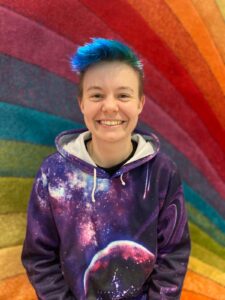 Kelsie Mick Olds, MOT OTR/L
Enrollment Options

Professional Track
Provides a certificate of completion for 1.75 continuing education contact hours. Designed for social workers, educators, and early childhood educators looking to earn CE credit for professional development.
This course provides 0.175 General CEUs or 1.75 contact hours
Personal Track
Designed for parents, caregivers, and educators looking to deepen their knowledge and understanding and learn practical strategies for supporting neurodivergent children.
Professional Track
Personal Track
Meet Your Instructor
Kelsie Mick Olds, MOT OTR/L
Mick is an occupational therapist working both on- and offline to share knowledge widely about the ways that children grow, develop, and learn. Mick is passionate about play as the core meaningful occupation that underlies childhood, and about equipping adults with the education and practical tools they need to defend children’s right to play.
Mick has a Master of Occupational Therapy degree from the University of Oklahoma and has worked primarily in schools, as well as consulting with teachers, therapists, and parents to advocate on children’s behalf. Mick blogs as The OccuPLAYtional Therapist.
About This Course
What Is Regulation, Really?
Regulation is a word that gets used a lot — but it's often used as a fancy substitute for "calm" or "well-behaved." That's not quite what it means.
Regulation is when a person's energy matches the place they're in and the thing they're trying to do. A child running and laughing is perfectly regulated for a playground and not at all regulated for bedtime. A child who can't read the same sentence twice without losing it isn't being difficult — their brain's energy is too low for the task in front of them.
Dysregulation isn't just big emotions or meltdowns. It can look like a child who won't stop talking, a child who can't get out of bed, a child who seems to be looking right through you. Understanding what's actually happening — and what all three components of regulation are — changes how you read those moments.
Why Regulation Is So Hard to Support
If you've ever tried to calm down a child who is fully dysregulated, you already know that telling them to take a deep breath usually doesn't work. That's not because they're being defiant. It's because dysregulation affects access to the very brain functions needed to follow an instruction like that.
You've probably also felt the pull of your own dysregulation in those moments — tired, overwhelmed, out of resources — and wondered how you're supposed to help a child regulate when you can barely hold it together yourself.
This course walks you through what regulation actually is, why co-regulation comes before self-regulation, and what you can realistically do — for the child and for yourself — when things go sideways.
Big Talks, Little Talks
Understanding How Kids Think, Feel, and Behave — One Talk at a Time

Feeling All the Feelings: Co-, Dys-, and Self-Regulation is one of eight modules in Big Talks, Little Talks, a video course series by Kelsie Mick Olds covering key topics in neurodiversity and child development. Modules can be purchased individually or as a complete bundle.
Every module in the series includes two videos:
The professional development component. Kelsie walks through the topic in depth, giving you the knowledge and language to understand what's happening and how to respond. Big Talks run approximately one hour and qualify for continuing education credit.
A kid-friendly video that gives children accessible language to understand what's going on in their own bodies and brains. You can show it directly to a child, break it into shorter chunks across multiple sessions, or watch it yourself to pick up language you can use in your own conversations.
Who Is This Course For?
This course is designed for therapists, parents, caregivers, educators, and anyone who supports children who struggle with big emotions, behavioral dysregulation, or emotional overwhelm.
Whether you're a practitioner looking for a clearer framework to bring to your work, a parent who's exhausted from not knowing what to do in the hard moments, or a teacher trying to understand why the same child seems completely different from one day to the next — this course gives you language and tools you can start using right away.
Course Details
Select a track to view what's included.
Course Modules
Big Talks: Feeling All the Feelings: Co-, Dys-, and Self-Regulation
1:24:18This Big Talk explores the foundations of regulation and dysregulation in children and adults.
Presenter Kelsie Olds, OTR/L, introduces a three-part framework defining regulation as the match between a person’s energy, their environment, and the activity they are attempting.
The video covers
- How dysregulation presents across a range of energy states
- How co-regulation lays the neurological groundwork for eventual self-regulation, and
- Why many of the instinctive regulation tools children reach for are routinely restricted in home and school settings.
The talk closes with practical strategies for caregivers and practitioners supporting dysregulated children — including how to identify and maintain their own regulation in the process.
Little Talks: Why Do I Calm “Down” Instead of “Up”?
00:15:12This Little Talk speaks directly to kids about what regulation actually means — that energy being too high or too low is a mismatch, not a character flaw. Kelsie introduces three ways to solve that mismatch, gives kids language to identify what’s happening inside their own bodies, and encourages them to bring that language to a trusted adult.
What's Included
Course Content
Registration Information
To register, select your preferred course option on this page and complete your purchase. Access to all course materials is granted immediately upon completion of payment. If you require accommodations or have special needs requests, please contact us at ce@thinksensory.com.
Course Modules
Big Talks: Feeling All the Feelings: Co-, Dys-, and Self-Regulation
1:24:18This Big Talk explores the foundations of regulation and dysregulation in children and adults.
Presenter Kelsie Olds, OTR/L, introduces a three-part framework defining regulation as the match between a person’s energy, their environment, and the activity they are attempting.
The video covers
- How dysregulation presents across a range of energy states
- How co-regulation lays the neurological groundwork for eventual self-regulation, and
- Why many of the instinctive regulation tools children reach for are routinely restricted in home and school settings.
The talk closes with practical strategies for caregivers and practitioners supporting dysregulated children — including how to identify and maintain their own regulation in the process.
Little Talks: Why Do I Calm “Down” Instead of “Up”?
00:15:12This Little Talk speaks directly to kids about what regulation actually means — that energy being too high or too low is a mismatch, not a character flaw. Kelsie introduces three ways to solve that mismatch, gives kids language to identify what’s happening inside their own bodies, and encourages them to bring that language to a trusted adult.
What's Included
Course Content
Registration Information
To register, select your preferred course option on this page and complete your purchase. Access to all course materials is granted immediately upon completion of payment. If you require accommodations or have special needs requests, please contact us at ce@thinksensory.com.
Learning Outcomes
Upon completion of this course, participants should be able to:
- Define regulation and dysregulation using the three-part framework of energy, place, and task.
- Identify ways dysregulation can present in children, including both high-energy and low-energy states.
- Explain how co-regulation supports the development of self-regulation across the lifespan.
- Describe the role of child-led play in building natural self-regulation skills.
Continuing Education Details
Feeling All the Feelings: Co-, Dys-, and Self-Regulation
Video lecture with slide presentation, optional companion notes document.
To receive 0.175 CEUs (1.75 contact hours) for this activity, you must complete all of the following:
- View all required video content in its entirety.
- Pass the post-activity learning outcome assessment with a score of 80% or higher.
- Complete the post-activity evaluation.
Partial credit is not available. You must complete all requirements listed above to receive CEUs and a certificate of completion.
If you do not achieve a passing score of 80% on the learning outcome assessment, you may retake the assessment. There is no limit on retake attempts.
Mick was paid for their contributions to Goal Writing for Autistic Students. Mick receives commission for the sales of Big Talks Little Talks. Mick is the author of a book, “Your Child’s Point of View: Understanding the Reasons Kids Do Unreasonable Things” and receives royalties for its’ sale. Mick is the owner of The OccuPLAYtional Therapist and receives speaking fees.
Mick is Autistic and has friends and family members who are Autistic.
Think Sensory will issue a full refund to a learner who requests cancellation within 10 calendar days of purchase, provided the learner has not accessed any course content. Once any course content has been accessed, no refund will be issued, regardless of how much of the activity has been completed. Due to the digital nature of CEU-eligible PD activities, Think Sensory does not offer partial refunds after content has been accessed.
If Think Sensory cancels or removes a course from the platform, affected learners will be notified in advance and provided with an appropriate remedy. For full details, see our Terms of Service.
To request a cancellation, email ce@thinksensory.com.