
Protecting the Power of Play
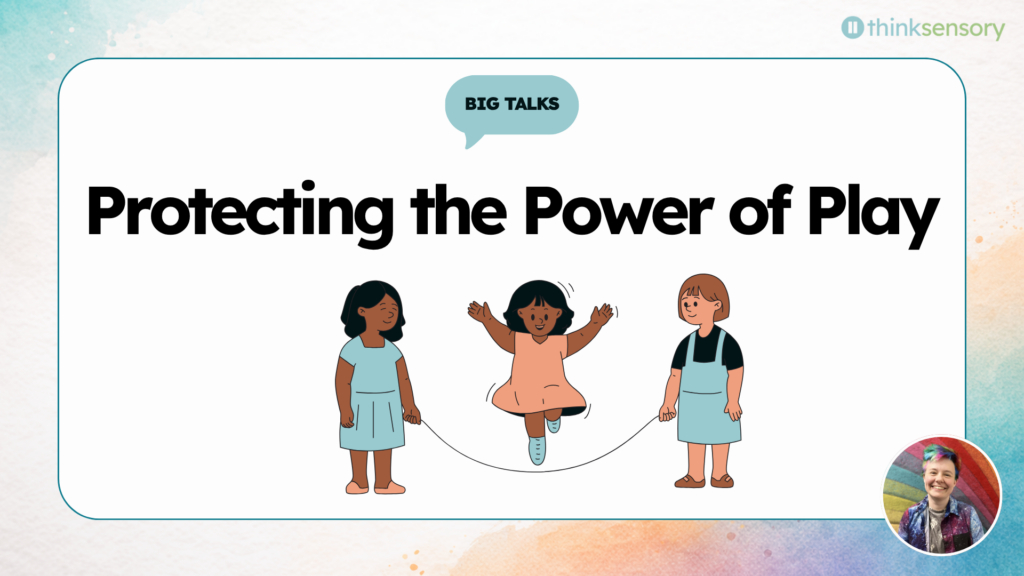
Play isn’t what kids do when they’re not learning. It’s how they learn, how their bodies build the strength they need for school, and how their brains develop the skills that reading and writing depend on. Understand the research showing play outperforms direct instruction for young children, learn the foundational skills that must be in place before academic learning can succeed, and get practical strategies for bringing real movement and play back into home and classroom settings.
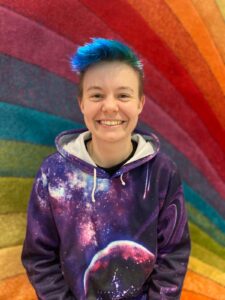 Kelsie Mick Olds, MOT OTR/L
Enrollment Options

Professional Track
Provides a certificate of completion for 1.5 continuing education contact hours. Designed for social workers, educators, and early childhood educators looking to earn CE credit for professional development.
This course provides 0.15 General CEUs or 1.5 Contact Hours
Personal Track
Designed for parents, caregivers, and educators looking to deepen their knowledge and understanding and learn practical strategies for supporting neurodivergent children.
Professional Track
- Big Talks Little Talks video course
- PDF Companion Notes
- Learning outcome assessment
- Certificate of completion for 0.75 General CEUs
Personal Track
- Big Talks Little Talks video course
- PDF Companion Notes
Meet Your Instructor
Kelsie Mick Olds, MOT OTR/L
Mick is an occupational therapist working both on- and offline to share knowledge widely about the ways that children grow, develop, and learn. Mick is passionate about play as the core meaningful occupation that underlies childhood, and about equipping adults with the education and practical tools they need to defend children’s right to play.
Mick has a Master of Occupational Therapy degree from the University of Oklahoma and has worked primarily in schools, as well as consulting with teachers, therapists, and parents to advocate on children’s behalf. Mick blogs as The OccuPLAYtional Therapist.
About This Course
Play Is Not a Break From Learning. It Is Learning.
Play has a way of getting treated like filler. Something kids do when nothing important is going on. Something that fills the cracks around the real work of school, extracurriculars, and structured enrichment. In the current push to start academics earlier and earlier, play is often the first thing to get cut.
But the research tells a different story. For young children, play consistently produces stronger learning outcomes than direct instruction across early math skills, shape knowledge, task switching, and spatial vocabulary. Not equivalent outcomes. Stronger outcomes.
Play is also how children build the physical foundations they need before reading and writing are even possible. Core strength, joint stability, bilateral coordination, visual tracking, and fine motor control all develop from the inside out, over time, through movement and exploration.
What Happens When Play Gets Cut Too Soon
When young children are pushed into academic tasks before the foundational skills are in place, the results show up in ways that often get misread. Struggles with handwriting, trouble sitting still, difficulty holding a pencil, shutting down when a task feels too hard. It's easy to label these as behavior problems or as a child who just isn't trying.
What's actually happening is that the body isn't ready yet. The core isn't strong enough, the joints aren't stable enough, the fine motor skills haven't had time to develop. Pushing harder doesn't build those skills. Play does.
This course gives you the framework to see play as the developmental work it actually is, along with practical strategies for protecting and supporting it across home and classroom settings.
Big Talks, Little Talks
Understanding How Kids Think, Feel, and Behave — One Talk at a Time

Protecting the Power of Play is one of eight modules in Big Talks, Little Talks, a video course series by Kelsie Mick Olds covering key topics in neurodiversity and child development. Modules can be purchased individually or as a complete bundle.
Every module in the series includes two videos:
The professional development component. Kelsie walks through the topic in depth, giving you the knowledge and language to understand what's happening and how to respond. Big Talks run approximately one hour and qualify for continuing education credit.
A kid-friendly video that gives children accessible language to understand what's going on in their own bodies and brains. You can show it directly to a child, break it into shorter chunks across multiple sessions, or watch it yourself to pick up language you can use in your own conversations.
Who Is This Course For?
This course is designed for therapists, parents, caregivers, educators, early childhood educators, and anyone who supports young children in settings where the pressure to start academics early keeps squeezing play out of the day.
Whether you're advocating for a specific child whose development is being misread, rethinking your own classroom or home routines, or looking for language to push back on the earlier-is-better narrative, this course gives you the research, the framework, and the practical strategies to do it.
Course Details
Select a track to view what's included.
Course Modules
Big Talk: Protecting the Power of Play
1:20:49This Big Talk makes the case for protecting child-led play as a developmental necessity, not a filler activity. Presenter Kelsie Olds, OTR/L, examines the research on how children learn through play versus direct instruction, walks through the foundational physical and social-emotional skills that must develop before children are ready for academic learning, and explains the developmental sequence through which those skills are built.
The video introduces a framework of play types and maps each to the preschool skills it develops, then closes with practical strategies for bringing movement and sensory-rich activity into classroom and home settings — and for supporting kids when developmental stages have been missed.
Little Talk: My Brain Knows Playing is Powerful
19:59This Little Talk introduces kids to the idea that playing is how human bodies and brains actually grow and develop. Kelsie explains the connection between physical play and how bodies build strength from the core outward, and uses the analogy of cutting a path through a jungle to show how the brain builds and strengthens new skills through repetition. The talk closes with practical encouragement for kids to find ways to bring movement and play into learning, and a reminder that making time for the things that bring them delight is not something to grow out of.
What's Included
Course Content
Registration Information
To register, select your preferred course option on this page and complete your purchase. Access to all course materials is granted immediately upon completion of payment. If you require accommodations or have special needs requests, please contact us at ce@thinksensory.com. Groups of 6 or more can inquire about group rates at the same address.
Course Modules
Big Talk: Protecting the Power of Play
1:20:49This Big Talk makes the case for protecting child-led play as a developmental necessity, not a filler activity. Presenter Kelsie Olds, OTR/L, examines the research on how children learn through play versus direct instruction, walks through the foundational physical and social-emotional skills that must develop before children are ready for academic learning, and explains the developmental sequence through which those skills are built.
The video introduces a framework of play types and maps each to the preschool skills it develops, then closes with practical strategies for bringing movement and sensory-rich activity into classroom and home settings — and for supporting kids when developmental stages have been missed.
Little Talk: My Brain Knows Playing is Powerful
19:59This Little Talk introduces kids to the idea that playing is how human bodies and brains actually grow and develop. Kelsie explains the connection between physical play and how bodies build strength from the core outward, and uses the analogy of cutting a path through a jungle to show how the brain builds and strengthens new skills through repetition. The talk closes with practical encouragement for kids to find ways to bring movement and play into learning, and a reminder that making time for the things that bring them delight is not something to grow out of.
What's Included
Course Content
Registration Information
To register, select your preferred course option on this page and complete your purchase. Access to all course materials is granted immediately upon completion of payment. If you require accommodations or have special needs requests, please contact us at ce@thinksensory.com. Groups of 6 or more can inquire about group rates at the same address.
Learning Outcomes
Upon completion of this course, participants should be able to:
- Explain the advantages of play over direct instruction as a method for building early academic and developmental skills in young children.
- Identify the foundational physical and social-emotional skills children need before they are ready for academic learning, and describe how each develops through play.
- Describe the developmental sequence of play types and explain how each type supports specific preschool readiness skills.
- Describe strategies for incorporating movement and play-based activity into classroom and home settings, and identify approaches for supporting children when developmental stages have been missed
Continuing Education Details
Protecting the Power of Play
Video lecture with slide presentation, optional companion notes document.
To receive 0.15 CEUs (1.5 contact hours) for this activity, you must complete all of the following:
- View all required video content in its entirety.
- Pass the post-activity learning outcome assessment with a score of 80% or higher.
- Complete the post-activity evaluation.
Partial credit is not available. You must complete all requirements listed above to receive CEUs and a certificate of completion.
If you do not achieve a passing score of 80% on the learning outcome assessment, you may retake the assessment. There is no limit on retake attempts.
Mick was paid for their contributions to Goal Writing for Autistic Students. Mick receives commission for the sales of Big Talks Little Talks. Mick is the author of a book, “Your Child’s Point of View: Understanding the Reasons Kids Do Unreasonable Things” and receives royalties for its’ sale. Mick is the owner of The OccuPLAYtional Therapist and receives speaking fees.
Mick is Autistic and has friends and family members who are Autistic.
Think Sensory will issue a full refund to a learner who requests cancellation within 10 calendar days of purchase, provided the learner has not accessed any course content. Once any course content has been accessed, no refund will be issued, regardless of how much of the activity has been completed. Due to the digital nature of CEU-eligible PD activities, Think Sensory does not offer partial refunds after content has been accessed.
If Think Sensory cancels or removes a course from the platform, affected learners will be notified in advance and provided with an appropriate remedy. For full details, see our Terms of Service.
To request a cancellation, email ce@thinksensory.com.